Applications become specification inputs

Electric Golf Cart Manufacturers for Commercial Use Cases

Use case labels are only the beginning. We help US business buyers describe the route, passenger or cargo duty, site rules, charging access and delivery scope that candidate manufacturers must address.

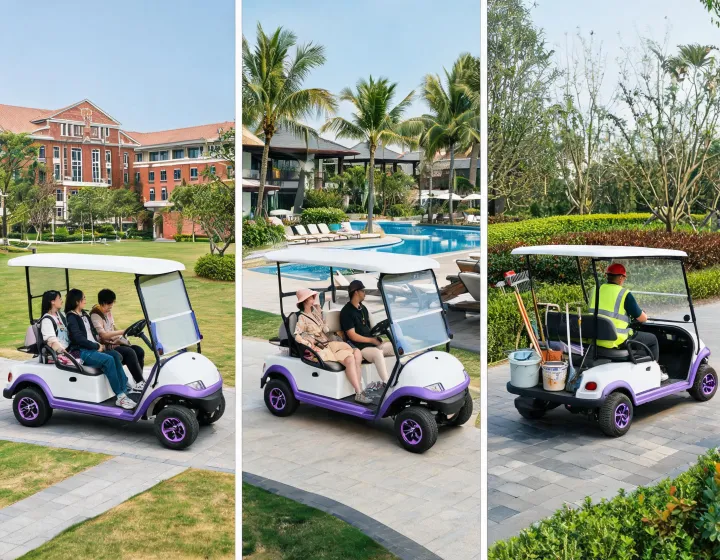
Electric golf carts serving campus hospitality and facility routes
RouteDistance, grade, surface, stops, climate and daily hours
LoadOccupants, cargo, accessories, payload and towing task
SiteSpeed environment, turning space, charging and destination rules

Three operating lanes

Match electric cart choices to the work, not a generic model name

A

Campus and facility passenger movement

Describe peak occupants, boarding frequency, route length, slopes, weather exposure, accessibility considerations, parking dimensions and the site’s speed controls.

B

Hospitality and resort guest transport

State seat orientation, luggage needs, finish expectations, canopy and windshield requirements, operating hours, charging windows, noise priorities and service-document expectations.

C

Maintenance, grounds and utility duty

Define cargo-bed dimensions, actual load, towing task, hitch needs, stop-start cycle, surface, ground clearance, tires and whether tools or attachments remain on board.

Application matrix

Convert site constraints into quotation fields

Application inputWhy it changes selectionHow to make it verifiable
Daily route and gradeEnergy use, motor loading and braking needs vary with dutyProvide a route profile and ask for the range or duty test conditions
Occupants and carried itemsRemaining payload and energy use change with actual loadState occupant assumption, cargo mass and installed accessories
Charging windowCharger power, connector and operating schedule must fit the siteConfirm site supply and request pack, charger and connector details
Private site versus road-intended useEquipment and destination review may differIdentify destination and request exact-model, configuration and model-year documents
Delivered scopeUnit price alone omits inspection, packing, freight and destination costsCompare one Incoterm, destination and itemized logistics basis

Selection trade-offs

Evidence questions for electric cart applications

These points disclose where a headline specification may not predict the buyer’s actual duty.

Range figure versus real route

A controlled test may favor light load, moderate speed and level ground; a commercial route may add passengers, grades, heat, cold and frequent stops. Record the test basis and arrange a supplier-agreed validation method before treating the figure as route capability.

Longer wheelbase versus maneuverability

Additional seating can support passenger movement but may increase overall length and turning requirements. Compare the exact dimensions with gates, pathways, parking, elevators or loading areas rather than selecting by seat count alone.

More battery versus load and cost

A larger pack may change curb weight, available payload, charge time and purchase cost. Compare nominal and usable kWh, charger power, warranty terms and replacement-service expectations on the quoted configuration.

Low-speed label versus destination acceptance

A category name does not prove road legality. Equipment, identification and documentation must be tied to the exact model, configuration and model year, then reviewed for the intended US destination and operation.

Start from the route

Share an application brief for manufacturer comparison

Include site type, route, load, speed environment, charging access, configuration, quantity, destination and the files your team needs to review. We will organize those requirements for supplier outreach without treating unconfirmed claims as accepted specifications.